
How to Unclog a Drain (And Know When to Call Beasty Plumbing in Chalmette)
Slow sink? Backed-up tub? Gurgling toilet? A clogged drain is one of the most common (and annoying) plumbing problems for homeowners in Chalmette and all of St. Bernard Parish. In this article we discuss how to unclog a drain in Chalmette or anywhere.
In this guide, we’ll walk through:
Table of Contents
Step 1: Figure Out What’s Actually Clogged
Before you grab chemicals or rent a snake, slow down and diagnose.
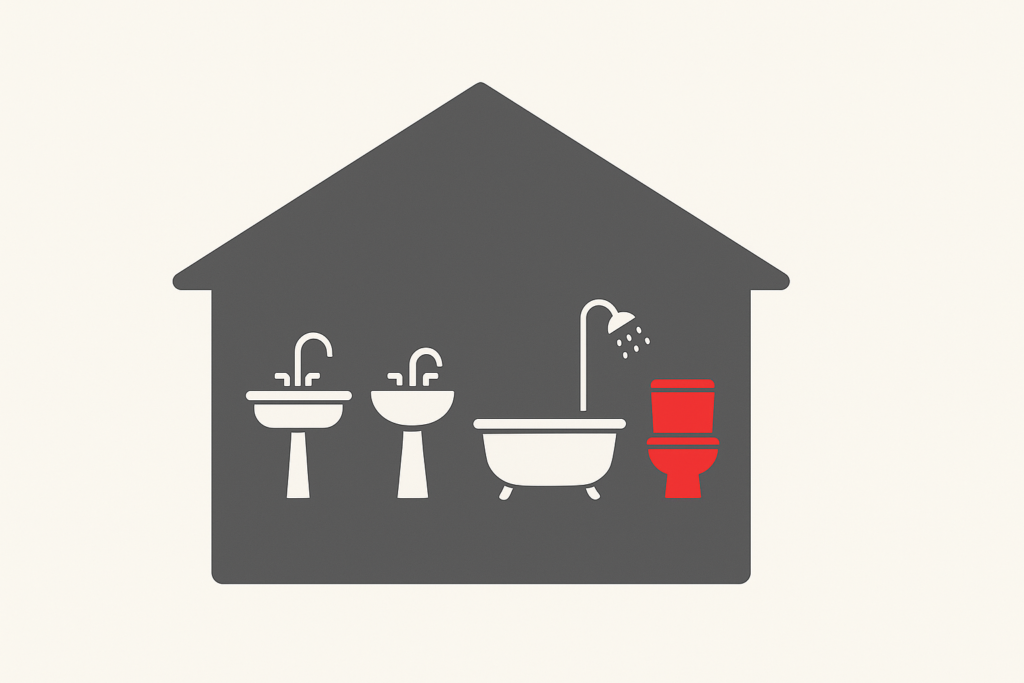
One drain, one room, or the whole house?
- One drain only
Example: only the bathroom sink or only the kitchen sink.
→ Likely a local drain clog in that branch line or trap. - One room of the house
Example: tub and sink in the same bathroom.
→ Likely a clog in the branch line serving that bathroom. - Multiple fixtures in different parts of the house
Example: toilets, tubs, and a floor drain backing up.
→ Often points to a main sewer line clog or a larger blockage outside.
Watch for “cross-talk” between fixtures
These are classic warning signs:
- Flush a toilet and the tub or shower drain gurgles
- Run the washing machine and a nearby toilet starts bubbling
- Using the kitchen sink makes a floor drain back up
Those gurgling sounds usually mean air is trapped in the line because of a serious partial or full blockage further down the pipe.
In many Chalmette homes – especially older houses with cast iron or clay sewer lines – this often means the main line needs to be checked, not just the sink you see backing up.
Step 2: Is It Your Problem or the City’s?
If multiple fixtures are backing up and you suspect a main sewer issue, you need to know:
Is the clog on your property or out in the city’s line?
Every city’s rules are a bit different, but generally:
- The homeowner is responsible from the house to the property line / tap into the city main.
- The city is usually responsible for the sewer main out in the street.
Clues it might be a city/main sewer problem
These aren’t 100% conclusive, but they’re strong red flags:
- Several neighbors are having backups around the same time
- Your yard or street area smells like sewage
- You see manhole covers overflowing or water pooling around them, especially during heavy rain
If you suspect a city issue:
- Call your local sewer/water department and report a possible main line backup.
- If they check the main and say it’s clear, then the problem is almost certainly on your side of the line.
That’s usually when bringing in a licensed plumber for a camera inspection pays off. A quick look with a sewer camera can confirm whether the line is blocked on your property or further out in the city line.
Step 3: Check Your Outside Cleanouts
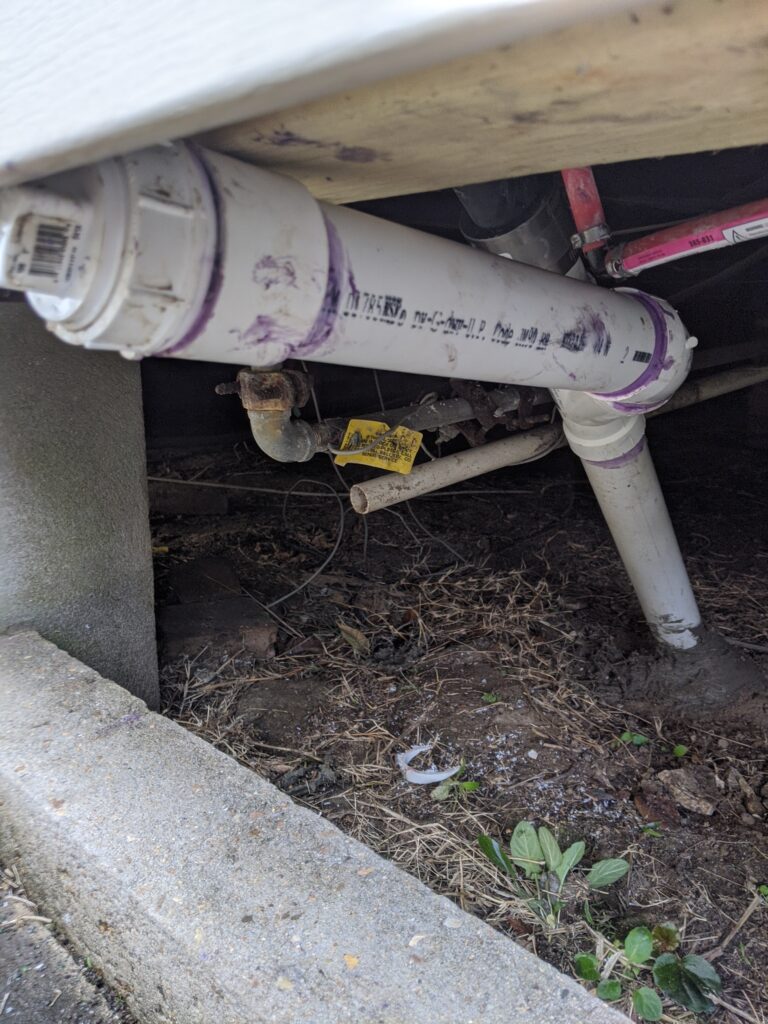
Most homes have a cleanout (or sometimes two) – a capped pipe that gives direct access to the main sewer line.
Where to look for cleanouts
You’ll often find them:
- Near the front of the house along the foundation
- Just outside a bathroom wall
- In a flower bed, near the driveway, or around the property line
- As a two-way cleanout (one side toward the house, one toward the street)
How to check it safely
- Locate the cleanout – look for a round or square cap (often 3″–4″) sticking slightly above ground or under a cover.
- Put on gloves and have a bucket or towels ready.
- Unscrew the cap slowly.
- If it’s under pressure, you may see water or sewage rise and spill out – that tells you the line is full.
- Observe what happens:
- Standing water in the cleanout = the line is blocked downstream (toward the street or sewer main).
- No standing water, just damp = the blockage might be inside the house or closer to individual fixtures.
If sewage is already standing in or overflowing from the cleanout, that’s a strong sign you have a main line issue – usually the point where calling a pro is smarter than continuing DIY.
Step 4: Safe DIY Methods for Minor Drain Clogs
Not every clog means you need a truck in the driveway. For small, isolated clogs (like a slow bathroom sink or tub), try these safer DIY steps first.
Boiling water (for certain sinks, not toilets)
- Bring a pot of near-boiling water and pour slowly into the drain in stages.
- This can help break up grease or soap buildup in kitchen drains.
- Don’t use this in toilets or on cracked or questionable fixtures, and be cautious with very old or delicate PVC.
Use the right plunger
- Cup plunger for sinks/tubs.
- Flange plunger for toilets.
- Seal the overflow holes (on sinks/tubs) with a wet rag to get better suction.
- Make 10–15 firm plunges, then test the drain.
If plunging clears it and it doesn’t instantly back up again, you may have gotten lucky with a small blockage.
Clean the P-trap (for sinks)
For a kitchen or bathroom sink:
- Place a bucket under the P-trap.
- Loosen the slip nuts by hand or with channel-lock pliers.
- Remove the trap and clean out gunk, hair, and debris.
- Reinstall, check for leaks, then test the flow.
This is often enough for simple sink clogs if the problem is close to the fixture.
Step 5: Renting a Drain Snake – What Size and When?
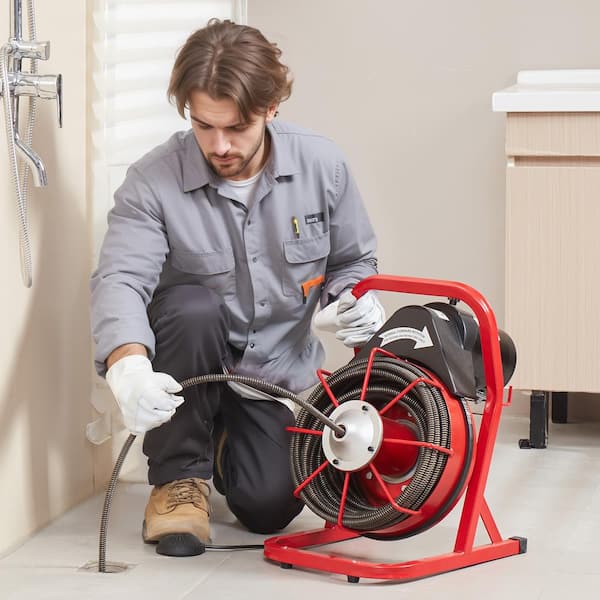
If plungers and trap cleaning aren’t enough, the next step is often a drain snake (drain auger).
Snakes for small drains (sinks, tubs, showers)
For basic home use:
- A handheld or small electric snake with a 1/4″–3/8″ cable works for many sink/tub lines.
- Length: 15–25 ft is usually enough for small clogs.
- These are what most DIYers can safely handle without too much risk.
You can often rent small drain cleaners at big box stores. For example, the Chalmette Home Depot Rental Center offers drain cleaners and plumbing tools for short-term projects. The Home Depot
Tip: Ask the rental desk to confirm which size snake matches the type of drain and pipe diameter you’re working on.
Snakes for toilets
- Use a closet auger (toilet auger) instead of a regular snake.
- It’s designed to navigate the toilet’s built-in trap without damaging the porcelain.
Snakes for main sewer lines
This is where most DIY attempts go sideways:
- Main lines typically require a larger machine with a 3/8″–5/8″ or even 3/4″ cable and cutting heads. The Home Depot+1
- These machines are heavy, powerful, and can cause serious injury or damage if used incorrectly.
They can:
- Break old or fragile pipes
- Get stuck in roots or collapsed lines
- Whip or kink if not handled properly
If you’re considering renting one of those larger machines, that’s usually the point where it’s safer (and often cheaper long-term) to call a professional like Beasty Plumbing.
Step 6: Other DIY Drain-Cleaning Techniques (Use With Caution)
Enzyme or bio-based drain cleaners
- These can help maintain drains and slowly break down organic buildup (hair, food, grease).
- They’re usually safer for pipes than harsh chemical drain cleaners.
- They work best as preventative maintenance, not emergency unclogging.
Chemical drain cleaners
Use these very carefully, if at all:
- They can generate heat, damage older pipes and seals, and create hazardous conditions if you later use a snake or disassemble plumbing.
- If you’ve already used a chemical cleaner and it didn’t work, tell any plumber who shows up before they start snaking or cutting into the line.
At Beasty Plumbing, we generally recommend avoiding harsh chemical drain cleaners. Mechanical cleaning (snaking, jetting) and good maintenance is almost always a better long-term solution.
Need Materials? Local Plumbing Supply Options
If you’re comfortable with light DIY and just need basic plumbing parts or repair materials, there are several places around the New Orleans area where homeowners can pick up supplies:
- Chalmette Home & Power Equipment – a long-time local shop with plumbing fixtures and hardware. Chalmette Home and Power Equipment
- Bywater Ace Hardware – a large plumbing supply distributor with fixtures, faucets, and parts. Get Directions
- Poydras Junction Hardware ) – a major plumbing and HVAC supply house serving pros and homeowners. Poydras Junction Hardware
- Home Depot Chalmette Store # 073
Wherever you go, bring photos and measurements of what you’re working on so the counter staff can help you pick out the right fittings, traps, and replacement parts without multiple trips.
When to Stop DIY and Call a Pro Like Beasty Plumbing in Chalmette
504-475-3250
DIY has its limits. Here are clear signs it’s time to bring in a professional plumber:
- 1. Multiple fixtures are backing up – If toilets, tubs, and floor drains are all involved, you’re likely dealing with a main sewer line issue, not just a small clog.
- 2. Sewage is coming up in tubs, showers, or floor drains – This is a sanitary and health hazard. Don’t ignore it or hope it clears on its own.
- 3. The clog keeps coming back – If you’ve plunged and even used a small snake and the drain still slows down or backs up again: There’s likely a deeper issue: tree roots, collapsed pipe, heavy grease, or foreign objects.
- 4. Standing water in (or overflowing from) the outside cleanout – That’s a strong sign of a main line blockage further down the pipe.
- 5. Repeated clogs in the same line – This often points to structural problems with the pipe: low spots, cracks, or root intrusion that need camera inspection and possibly repair.
- 6. You’re not comfortable using powered equipment – Large drain machines can hurt you or your plumbing if you’re not trained. At that point, DIY risk can outweigh the savings.
Final Tip: Don’t Ignore Early Warning Signs
- Slow drains
- Occasional gurgling
- Random sewer smells
These are your plumbing system whispering that something’s wrong. Catching clogs early – and knowing when to escalate from DIY to professional help – keeps small issues from turning into “everything is backed up” emergencies.
How do I know if my drain clog is in the house or in the main sewer line?
If just one sink or tub is slow, it’s usually a local clog. If multiple toilets, tubs, or floor drains are backing up or you get gurgling in other fixtures when you run water, that often points to a main sewer problem. At that point, it’s smart to have Beasty Plumbing do an inspection and, if needed, run a camera in the line.
When should I stop trying to DIY and call a plumber?
If plunging and a small hand snake don’t solve it, or if the clog keeps coming back, stop. Also call a pro immediately if you see sewage in a tub, shower, or floor drain, or if your outside cleanout is full. Those are signs of a main line issue that can get worse fast.
Are chemical drain cleaners safe for my pipes?
Many store-bought drain cleaners use harsh chemicals that create heat and can damage older pipes, seals, or fixtures. They can also be dangerous to handle. We generally recommend avoiding them and using mechanical cleaning instead (snaking or hydro-jetting) for a safer, longer-term fix.
Do you offer up-front pricing for drain cleaning?
Yes. After a quick inspection, we’ll explain what we believe is causing the clog and give you a clear, up-front price before we start any work. No surprise add-ons when we’re finished.
Will you protect my floors and clean up after the job?
Absolutely. We use drop cloths, shoe covers, and clean up the work area before we leave. The only thing you should notice after we’re done is that your drains are working again.
What areas do you serve for drain and sewer work?
We serve homeowners in Chalmette, Arabi, Meraux, Violet, and throughout St. Bernard Parish. If you’re nearby and not sure if you’re in our service area, just give us a call.
Get Expert Drain Help in on how to unclog a drain in Chalmette & St. Bernard Parish
If you’re a homeowner in Chalmette, Arabi, Meraux, Violet, or anywhere in St. Bernard Parish and you’re dealing with:
- A stubborn clogged sink or tub
- Toilets that keep backing up
- Sewage smells or gurgling drains
- Standing water in your outside cleanout
…it’s time to bring in a pro.
Beasty Plumbing Repairs & Service – Chalmette, LA
- Local, licensed, and experienced with St. Bernard Parish plumbing systems
- Fast response for drain cleaning and sewer line issues
- Honest options for long-term fixes, not just quick band-aids
👉 Ready to stop fighting that clog?
Visit stbernardplumber.com and contact Beasty Plumbing today to schedule your drain inspection and cleaning.
0 Comments